Showing posts with label Assam. Show all posts

27 February 2019

Majuli A Treasure Island


Once upon a time, long long ago, there was a land through which flowed a hundred rivers. The Dihing, Disang, Dikhow, Subansiri, Kopili to name just a few. The mightiest of them all however, was a mythical male river Luit, commonly known as the Brahmaputra. It flowed down the lofty northern mountains, swift and deep.


Many moons ago, recurring earthquakes shook and shifted the land and persistent floods broke riverbanks. The Dihing and the Luit intertwined and created an emerald island called Majuli – the land between the two rivers.
Legend has it that madly in love, Krishna and Rukmini decided to elope together. They travelled across many places, finally discovering a jade green isle floating on the Brahmaputra. Krishna, smitten by the serene beauty of the island declared it the second Dwarka, the kingdom of the creator himself.


Historical texts reveal that Majuli was formed sometime around 1750. Many ethnic groups and tribes have been living on this island for more than 200 years, co-existing in peace and harmony, enjoying nature's bounty. It was this tranquillity and isolation of Majuli that drew the great Bhakti saint Srimanta Sankardev to establish the Satra culture at Majuli. In the 16th century, Sankardev initiated the Ekasarana Dharma (literally translating to shelter under one religion). The chanting of prayers or naam is considered a superior form of devotion. Idol worship and rituals are forbidden.
Sankardev and his chief disciple Madhabdev established the two unique institutions of Assam – The 'Namghar' (prayer halls) and the 'Satras' (monasteries). Both these institutes are intimately associated with the social, cultural and religious life of Assamese society.


A cultural mosaic

Majuli is like the Vatican of Neo-Vaishnavism. Sankardev established 65 Satras in Majuli of which 22 are operational. Satras are sacred places where the bhakats (monks) maintain celibate stature and spend their days in prayer and the ways of living expounded by their great saint leader.


A young bhakat in a Satra at Majuli

The founding father of the cultural revolution in Assam, Srimanta Sankardev, gave religion an artistic form by introducing the borgeet (devotional songs), ankia nat (one-act plays based on the life of Lord Krishna), bhaona (musical plays based on religion), and the sattriya dance (a classical dance-drama based on Krishna's life). In Majuli, the Satras became the centres of art and culture.


A Bhaona performance 

Armed with all of this knowledge I set out to discover the island of Majuli. Leaving the hustle and bustle of city life behind our boat set sail from Neemati Ghat, Jorhat and headed for Kamalabari Ghat in Majuli.

The ferry ride across the Brahmaputra
The ferry ride across the mighty river Brahmaputra (which costs ₹15 and takes about an hour) was exhilarating. I shared space with the islanders crammed in between their cars and bikes. Majuli Island is huge and spans around 880 square kilometres, so hiring some kind of transport is probably a good idea.
A pre-booked Tata Sumo taxi cost me ₹1500 for 8 hours and was already waiting to take me to the hotel when I arrived. The driver doubled up as a guide. Other transport options include shared taxis, rickshaws or even hiring a cycle or a scooter!


Majuli is almost untouched by the modern world. The locals mostly live in traditional bamboo and mud houses (no multi-stored buildings here), cook their food on firewood and weave their own clothes. Few hotels and home-stay options are available with bare basics but it's not for 5-star comfort that you want to visit Majuli. If luxury is usually your cup of tea then do not cross the Brahmaputra.

Things to do in Majuli:
1. Drop off the urbanised masquerade and live a day of your life in simplicity.
2. Wake up at dawn to the cacophony of parrots.
3. Be amazed at magical sunsets across the wetlands.


4. Embrace the twinkling fireflies under clear starry skies.
5. Be wonderstruck at the luxuriant growth of foliage, especially the cane and bamboo trees that line the narrow pathways that crisscross the island.
6. Experience the freshly cooked simple meals in unpretentious wayside dhabas.
7. Soak in the countryside charm of emerald green paddy fields.
8. Stroll into a Mishing village and savour their traditional food and local rice beer called apong.

A Missing tribal village at Majuli
9. Watch bamboo and clay turn into fierce mythological character masks in Samaguri Satra.

Mask making at Samaguri Satra
10. Meditate at a naam ghar or better still be a part of the evening prayers with the bhakats.
11. Get mesmerised by the Bhaona and Ankiya Nat.
12. Feel humbled inside a Satra for its vast history and tradition.
13. Finally, visit Majuli because it is a pearl nestled in the middle of a huge river and it is sadly eroding away. Majuli is shrinking in size due to erosion and may cease to exist in about fifteen or twenty years. Visit this cultural mosaic before the waters of the Luit submerge it forever.

8 January 2019

Missing You Ma

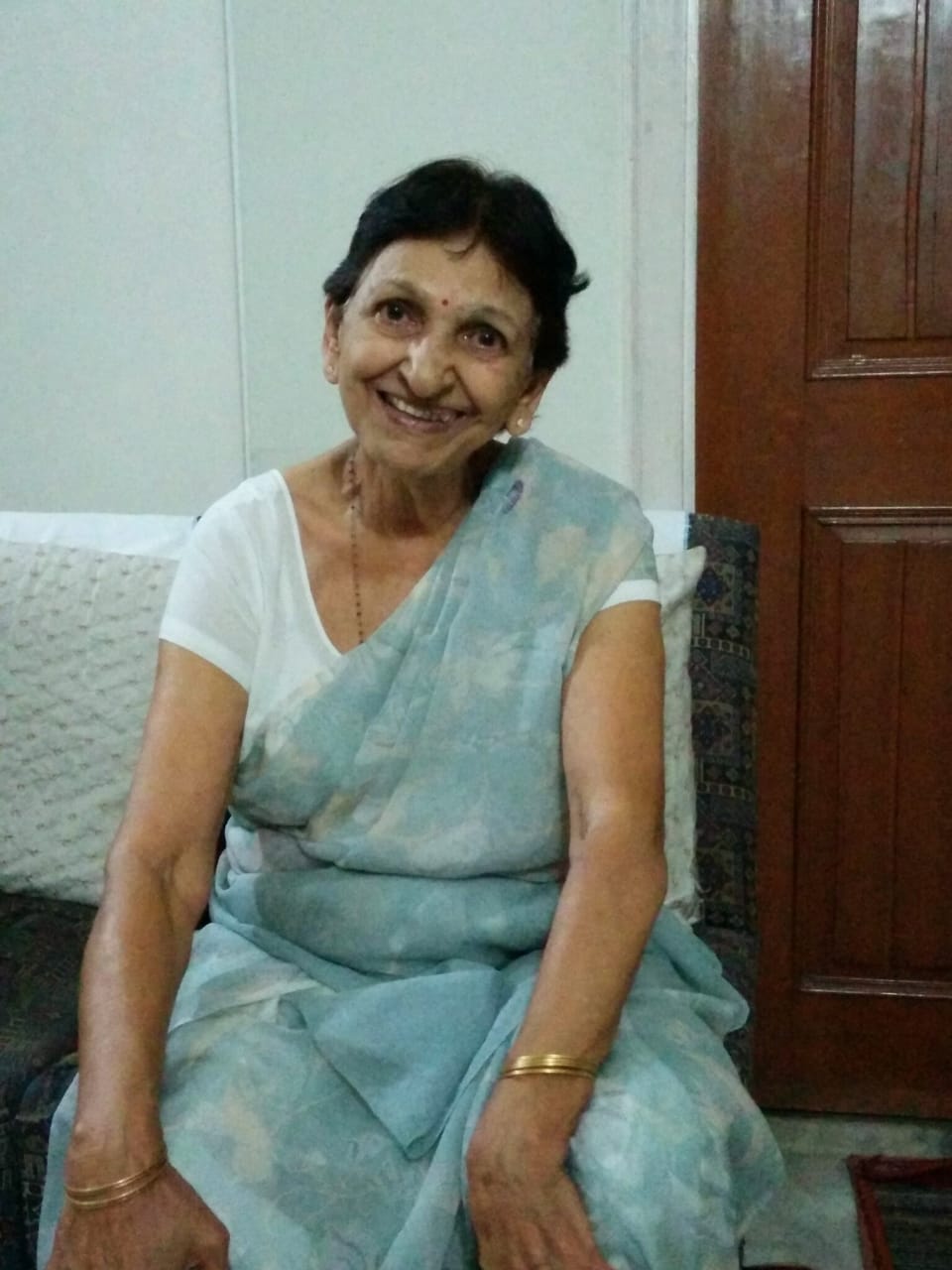
The sun rose in the eastern sky for the last time in 2018 and my mother's blue and green love birds that she cared for so dearly chirped and went about their morning business. They say that birds can sense a change in their environment. They were very quiet around the 29th of December. Was it the cold wet day that made then so quiet or was it because that was the day that my mother passed away leaving us to walk among the angels?


My mother Anny Koshy was born in God's own country- Kerala. At the age of 18 she travelled across India to the north eastern state of Assam to fulfil her fervent desire to become a doctor. While pursuing her MBBS she met my father Dr Aroon Das. They felt an instant attraction for one another and started a journey of love that has lasted a lifetime- the stuff that movies are made of!


My mother lived a very disciplined life. She taught us the importance of healthy living. Her morning walks are legendary for their punctuality, as well as the post walk laughter sessions she had with her friends all of who are at least 10 years her junior and from different socio-economic strata.
 Dr Anny Das became a well-known personality in the Uzanbazar area of Guwahati. Her lifetime of service as a doctor has left her patients full of anecdotes about her compassionate and selfless nature.Her humour and wit would often cure the sick even before they actually started their medication. 
Not many people knew this, but Anny was a woman of many enduring talents. Not only was she a great mother and wife, she was also a talented sportswoman. She was the best female athlete in her medical college, and she was also a swimmer for many years. Never in her entire life did she let her gender hold her back. She was a glowing example for both me and my sister of the fact that a woman can truly achieve anything that she puts her mind to. Even at the age of 81,she adapted to the ever-growing technological world.She would gladly converse with her family and friends using WhatsApp, share selfie images and even book Uber cabs.


Above all else however, travelling was her true passion- be it to the Lake District in UK or to visit her favourite grandchild in Bangalore. Her mind would never stop planning: new curtains, a trip to visit the Maasai Mara tribes of Kenya or creating a culinary dish for her family to savour. She was truly such a multifaceted woman that I find it hard now to encapsulate the essence of her whole being onto paper.
We will miss you Ma, in all the coming years of our lives. I know you will always be with us, forever smiling and happy.

13 April 2014

5 Annoying Questions!


1) How much are they paying you? (Actual meaning- What’s your salary?)

What’s it to you man? Will you increase it? I will be lying if I say I don’t work for money. It feels nice to see my bank balance grow in long digit numbers adding up month after month. But my real payment is when the kids I have taught grow up and come back on Facebook to say “hi Ma’am, Remember me? I am a doctor/ engineer/ CA/ stand-up comedian ” …you get the picture, that’s when I get my actual pay check.

2) You only have one child? (Emphasis on one child in a slow drawl… actual meaning: one daughter? *Shocked tone!*)

Why didn’t you go in for I.V.F, surrogacy, artificial insemination, adoption, cloning? Other desperate measures that could increase the human population by one more and your family would look so much more normal? Unlike now when you three look so lonely!
Poor you! Who’s going to cremate your body, without a son?
And there is no such thing as having too less in our country, more the better, you would look so good with a brood of screaming kids around you!
Your only child looks so lonely, no wonder she is so thin! No appetite for food without her siblings grabbing the last slice of pizza from her hand, she will never know the joys of wrestling for remotes, bathroom space and privacy! Tsk, tsk! She must be having mental issues fending off her boredom and loneliness no?

3) You don’t look Assamese?(Actual meaning: You are dark and people of north-east are  supposed to be fair and have mongoloid features and go to church)

Well just maybe you have your geography and history all mixed up. The people of Assam inhabit a multi-ethnic, multi-linguistic society. Negroid, Dravidians, Tibeto-Burmese as well as Aryans had been the important groups that lived in Assam. Migration of people to Assam from North India started as early as the 4th century .They introduced Hinduism in the North-East…….Blah blah blah!
Are you sure you can sustain more of this sociology/anthropology information, because I don’t mind carrying on.

4) Where are you from?

This is the most difficult to handle. I presume I am a homo-sapien and since homo-sapiens came from Africa and Eurasia some 200,000 years ago I too presume my ancestors came from there.
And if in case you mean like the larger picture of where we as humans came from? I would love to sit and have a chat regarding the cosmic theory vs. the Christian/Hindu concepts of man’s evolution!
Unless of course if you mean in the recent past , then I came from home and my home is at present in xyz city and before that it was in xyz city and before that ……I think I need a drink now (head to bar area).

5) Hello! Who is speaking?

Since you called and you dialed those numbers, you will have a better idea, no? As for me I am still trying to figure that question out myself! Why am I continuing this conversation? Hangs up phone!


14 February 2014

Being Indian


'Bruised Souls' By Nirupam Borboruah

My husband faced his first instance of racism 22 years ago in Assam. His Assamese father-in-law had just picked him up from the station and was bringing him home, pointing to some shanty huts on the way he said casually, these “Biharis” have come and made this once beautiful place dirty and filthy. The poor chap didn’t know how to respond as he was a “Bihari” born and bred and a proud one at that.

My husband has done his post-graduation from the iconic Delhi University. The campus was full of “harries” (Biharis) as they were referred to as in the 80s.They were the target of jokes and taunts by the local Delhites, these sometimes got pretty violent too

I am from Assam (and people disbelieve this as I am not remotely mongoloid in looks) and my friends from the other north-east states often called ‘chinkies’, ’Nepalese’ or even ‘Chinese’ in the D.U campus, were always presumed to be very casual and western in their life-styles. I had a friend from Nagaland, mongoloid features and all, she was the most introvert and shy creature I have ever come across. She never opened up to strangers, weighed her words and checked her behavior. She was solemn and serious on all occasions. Now this was contrary to the mind-set that the people had about the tribes of Naga land. They presumed she would be the typical north-east types-casual and easy-going, out to have fun, very ‘western’ in dress and outlook. Alas she was but the exact opposite.
What parallels do we draw from these examples? 


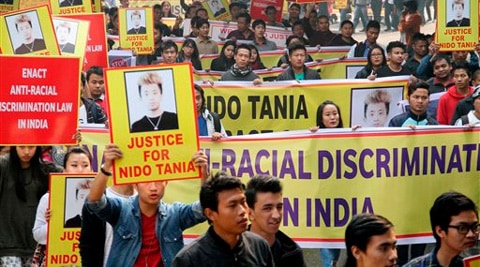
That Indians are prejudiced about everybody. Just because someone is from a certain part of the country, we are biased about them. We joke and make fun of people from anywhere. We have zero tolerance to those who are different from us. We are chauvinist in our attitude to anyone who is not from our caste, region, religion, community, who speak a different language, or who look different. The more the difference between ‘them’ and ‘us’, the more judgmental and dogmatic we become. We harbour narrow-minded opinions and views about the ‘differences’. We are sometimes hurtful and mean, and sometimes as in the case of thousands of Nido Tanias with violent consequences.

It may be someone from south then it’s “Madrasi” and they are fools, unless they are from Kerala then they are ‘kali-pilli nurses’. 

Punjabis (Sardars) are stupid and their stupidity strikes at 12 noon mostly! I lived in Punjab but never witnessed it and I pity the many Sikhs who are named Banta Singhs. 

Gujarati’s are gaudy and spend-thrift! And so are the Marwaris! Bengalis are snobs and argumentative. And the gibes continue, engulfing almost everybody!

We feel so proud and superior that we mock and make fun of anyone who is even slightly different from us. Yes we are xenophobic, bias and chauvinist and full blown RACISTS!!!

Life is tough in India being an Indian!
 
;